DeFi Tax-Loss Harvesting Before Year-End 2026: What US Rules Say Today, and What to Check First
NewsHow US tax-loss harvesting works for DeFi positions before 31 December 2026: the $3,000 limit, the wash sale text in 26 U.S.C. 1091, 2026 bills, per-wallet basis rules, and a worked example.


What to know first
Tax-loss harvesting means selling or closing a position at a loss so the loss can offset gains. For US taxpayers, the IRS treats digital assets as property, and net capital losses beyond your gains can reduce ordinary income by up to $3,000 a year, with the rest carried forward. The wash sale statute, 26 U.S.C. section 1091, is written for "stock or securities", and we saw no crypto wording in the version we read on 18 November 2026. But Congress has been working on bills that would change that, so the safe approach is to plan for the possibility, not assume it. This is general information for US readers only, not tax advice.
Our reading: harvesting is only worth it when the tax saved is clearly larger than gas, slippage and the time spent. For DeFi, where exits can be costly and record keeping is harder, that threshold is higher than for a simple spot token.
How we chose what to cover
Our usual search tool was blocked during this research, so we used news headline searches instead of a full web results page. Three queries (DeFi tax-loss harvesting, liquidity pool taxes and impermanent loss, and crypto tax-loss harvesting year-end) returned mostly tax software roundups, general year-end guides and 2026 headlines about the wash sale loophole. We read headlines only, not the articles. Almost nothing was specific to DeFi positions, so this guide focuses on that gap while staying within what the IRS and the statute actually say. The earlier draft stated that the wash sale rule "does not apply" as settled fact, gave a 15% to 45% tax saving range, and described Pendle, rebasing and bridge cases without sources. We replaced or hedged those.
Terms used in this guide
| Term | Plain meaning |
|---|---|
| Cost basis | What you paid for an asset, including fees |
| Realized loss | A loss you lock in by selling or otherwise disposing of the asset |
| Unrealized loss | A paper loss on something you still hold |
| Wash sale | Selling at a loss and buying back the same thing within 30 days before or after, which can disqualify the loss for securities |
| Short-term / long-term | Held one year or less / more than one year |
| Liquidity pool (LP) position | Tokens deposited in a DeFi pool in return for a receipt token |
| Impermanent loss | A value gap between holding tokens in a pool and simply holding them, not a tax loss until you exit |
| Form 1099-DA | The form brokers use to report digital asset sales to you and the IRS |
What the primary sources say
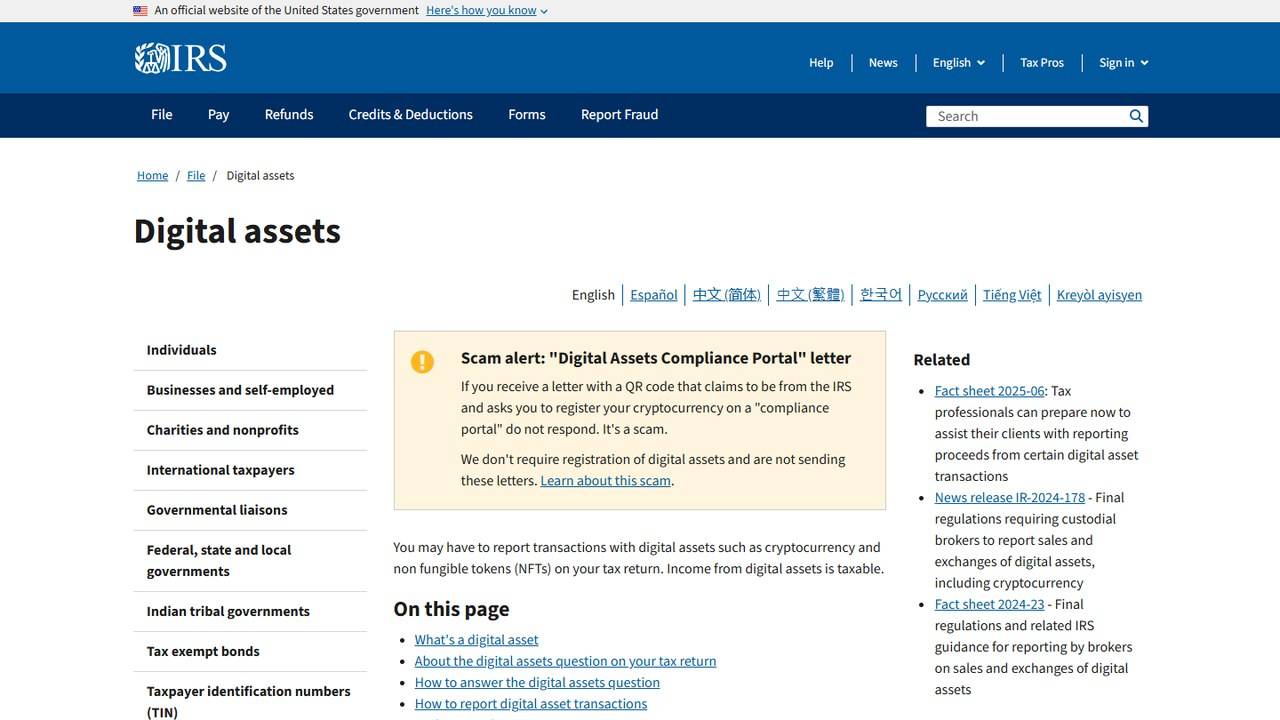
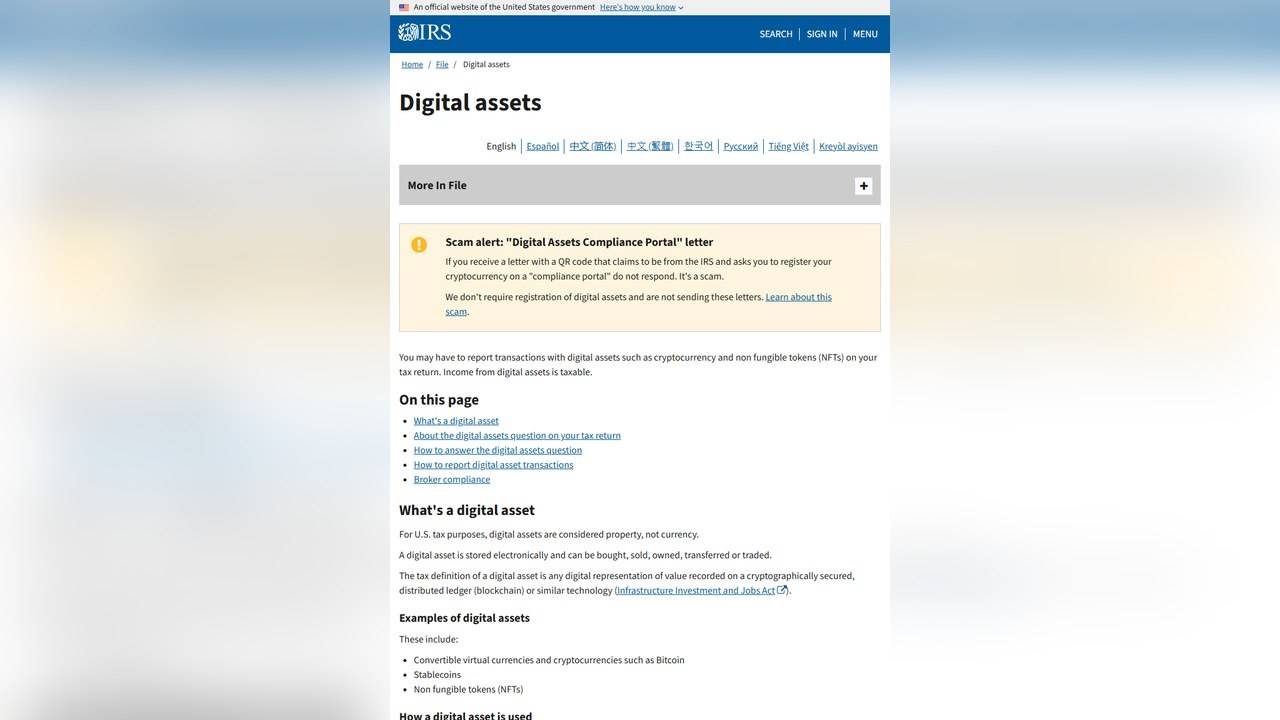
Digital assets are property. The IRS digital assets page says that for US tax purposes digital assets are considered property, not currency. Selling, swapping or otherwise disposing of one can create a gain or loss.
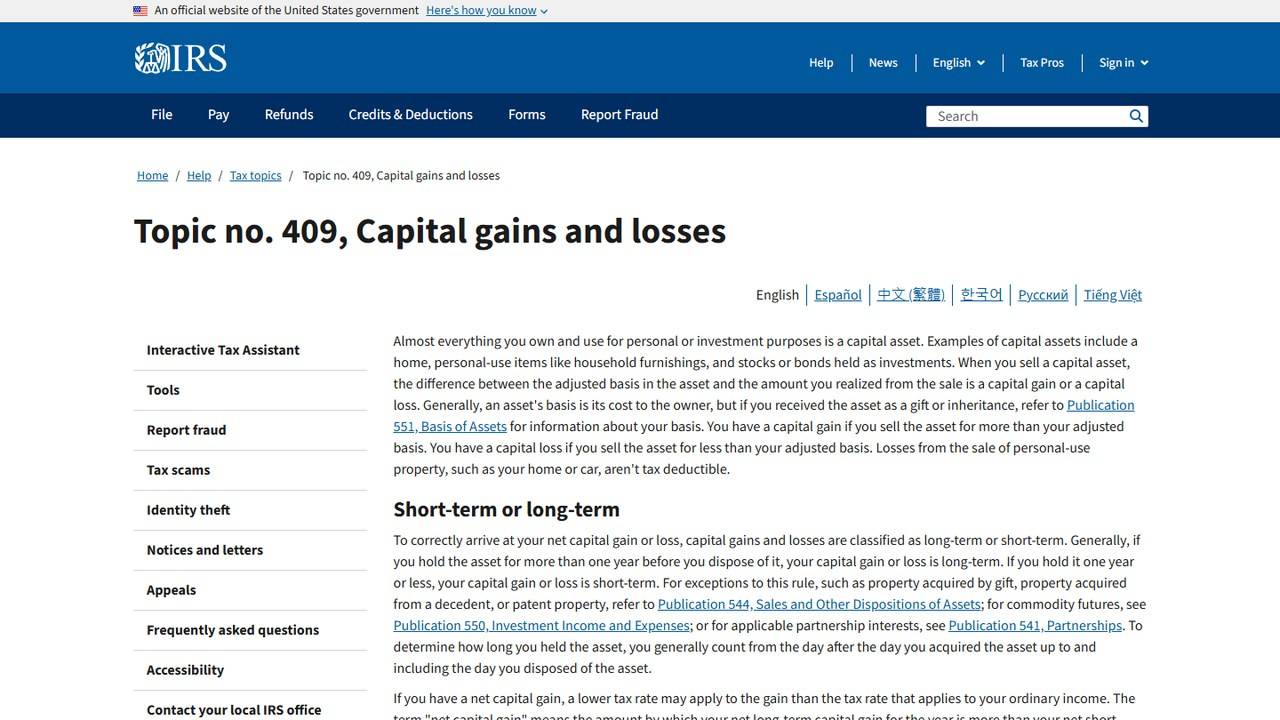
Losses offset gains, then limited income. IRS Topic 409 explains that a capital loss occurs when you sell for less than adjusted basis. If losses exceed gains, the amount you can use against other income is the lesser of $3,000 ($1,500 if married filing separately) or your net loss, and any excess can be carried forward. Short-term means held one year or less.
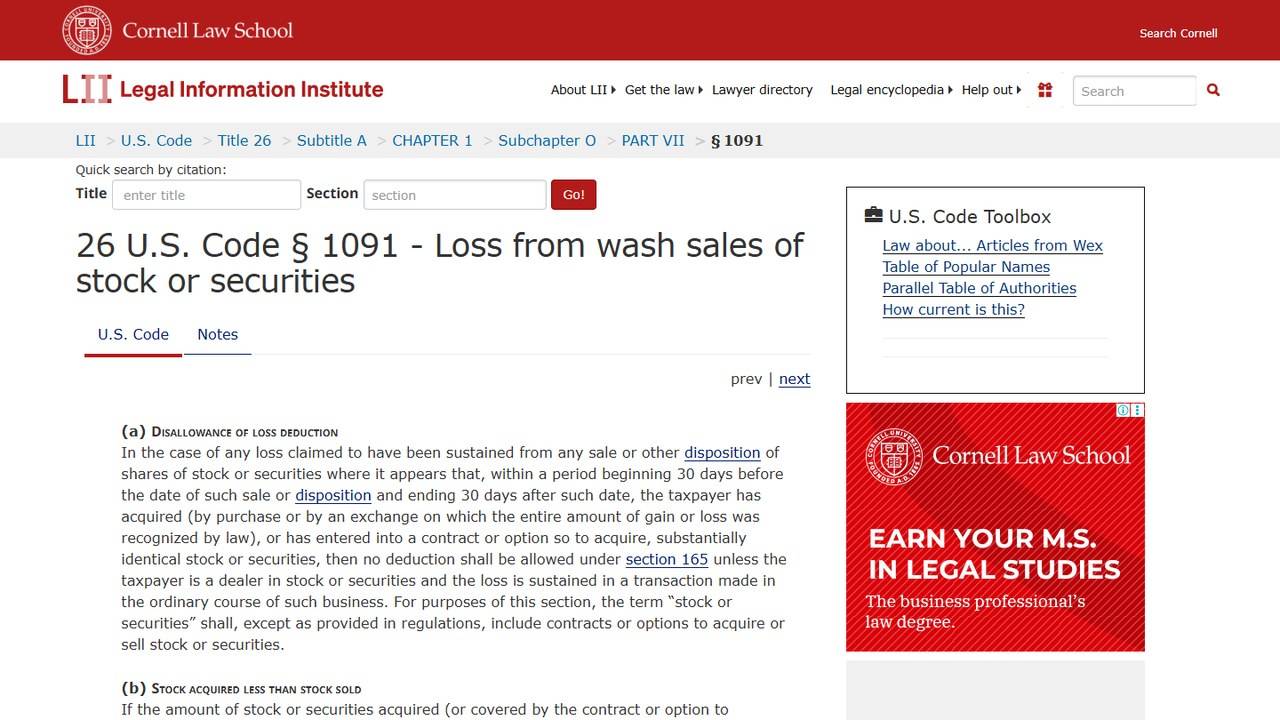
The wash sale statute is about stock and securities. The text of 26 U.S.C. section 1091 disallows a loss when substantially identical "stock or securities" are acquired within 30 days before or after the sale. The Cornell page we read showed a publication date of 28 September 2026. We saw no crypto-specific wording there. Whether a particular token could ever be treated as a security is a separate legal question we did not research.
Basis is tracked per wallet. Rev. Proc. 2024-28 explains that final regulations apply specific identification or first-in, first-out rules to units held within a single wallet or account for acquisitions and dispositions on or after 1 January 2025. In plain terms, which lot you sell matters, and each wallet is tracked on its own.
Broker reporting is expanding, but DeFi is largely outside it. The IRS page says brokers report gross proceeds on Form 1099-DA for transactions from 1 January 2025 and basis for certain transactions from 1 January 2026. It also says the final regulations do not include reporting requirements for decentralized or non-custodial brokers that do not take possession of the assets. So you cannot rely on a form to capture your DeFi trades.
Is the wash sale rule about to change? What the 2026 headlines show
We could only read headlines for this section, and we could not open the articles. They show activity in Congress through 2026, not a change in law.
| Date | Outlet | Headline (shortened) |
|---|---|---|
| 17 Jun 2026 | Rep. Jodey Arrington (.gov) | Arrington targets crypto tax loopholes with new legislation |
| 28 Jul 2026 | CNBC | Lawmakers renew push to axe a lucrative tax loophole for crypto investors |
| 30 Sep 2026 | 24/7 Wall St. | A Senate bill would make small stablecoin purchases tax-free and close crypto's wash-sale loophole |
| 22 Oct 2026 | Bitcoin Magazine | Blockchain Association presses Congress on crypto taxes as Clarity Act stalls |
Our reading: the direction of travel is toward applying wash sale style limits to crypto, and the market structure bill that might carry such changes was described as stalled in late October. If a bill passes with an effective date, losses harvested before that date would not be affected by it unless the law says otherwise. We did not verify any bill text or effective date, so check the current status before you trade.
Worked example (our own arithmetic, illustrative rates)
You realized a $12,000 short-term gain earlier in 2026. You hold a governance token bought for $8,000 that is now worth $3,200, an unrealized loss of $4,800.
| Item | Amount |
|---|---|
| Gain before harvesting | $12,000 |
| Loss realized by selling the token | $4,800 |
| Net gain after harvesting | $7,200 |
| Tax saved at an assumed 22% rate | $1,056 |
| Tax saved at an assumed 15% rate | $720 |
| Gas and slippage (assumed) | $60 |
| Net benefit at 22% | $996 |
The 22% and 15% rates are examples. Your actual rate depends on your income and whether gains are short-term or long-term. Short-term gains are taxed as ordinary income, and the IRS page we read says the rate on most net long-term gains is no higher than 15% for most people for 2025, so check the 2026 thresholds yourself.
Now the small case: a $300 loss at 22% saves $66. If exiting costs $70 in gas and slippage, you have lost money. Harvest where the saving clearly exceeds the cost.
Step by step
- List your realized gains for 2026. The loss is only useful against gains (and up to $3,000 of other income).
- List your unrealized losses. Use your wallet addresses and a tax tool to see cost basis by position. Do this per wallet, because basis is tracked per wallet.
- Match losses to gains. Short-term losses first offset short-term gains, and the same for long-term. Netting rules are on Topic 409.
- Estimate exit costs. Include gas, slippage and any protocol fees.
- Check the wash sale news before repurchasing. If you want to hold the same asset afterwards, decide based on the rules in force when you trade and ask a professional.
- Execute with time to spare. Network congestion can delay transactions near year-end. We did not verify how the IRS treats time zones for on-chain timestamps, so do not leave it for 31 December.
- Record it. Save the transaction hash, date, proceeds and basis. Brokers' 1099-DA forms will not cover most DeFi activity.
DeFi-specific cases
- Plain tokens in a wallet. The simplest case: sell below basis and the loss is realized.
- LP positions. Exiting is a disposal. How to value receipt tokens and the underlying assets is unsettled in our reading, and we did not find IRS guidance specific to LP positions on the pages we read. Use a tax professional.
- Impermanent loss. It is an economic comparison, not a tax event. A tax loss arises when you dispose of the position and proceeds are below basis.
- Moving tokens between your own wallets. The IRS digital assets page says transfers between wallets you own are not a reportable sale, unless you paid the transaction fee with digital assets, which counts as a transaction. A gas payment in ETH is therefore a small disposal.
- Rewards and airdrops. The IRS guidance list on its digital assets page includes a Tax Court memo titled "Cryptocurrency staking rewards are income" (TC Memo 2026-46). We did not read the memo. Check how your rewards were reported when you received them, because that sets your basis.
What we did not check
- Rules outside the United States. Other countries differ.
- State taxes.
- The text or effective dates of any 2026 bill. We saw headlines only.
- IRS guidance on LP tokens, restaking or yield tokens. We removed the earlier draft's Pendle and rebasing claims because we could not source them.
- The tax software tools named in the earlier draft. We have not tested them for this article, so we do not recommend any.
- How on-chain timestamps map to tax days.
FAQ
Does the wash sale rule apply to crypto in 2026?
The statute we read, 26 U.S.C. section 1091, refers to stock or securities and shows no crypto wording on the page we checked. Bills to change that have been proposed in 2026, so verify the current position before you rely on it.
Can I deduct all my crypto losses?
Losses first offset capital gains. Beyond that, IRS Topic 409 says you can deduct up to $3,000 against other income ($1,500 if married filing separately), and carry the rest forward.
Is impermanent loss tax deductible?
Not by itself. It becomes part of a taxable loss only when you dispose of the position and the proceeds are below your basis.
Does the IRS know about my DeFi trades?
Brokers report on Form 1099-DA, but the final regulations do not cover decentralized or non-custodial brokers. You are still responsible for reporting your own transactions.
Should I wait until 31 December?
Not necessarily. Network congestion and rule changes are risks, and some commentators argue for acting earlier. Plan with your tax professional.
This is general educational information for US readers, not tax advice. Rules and bills change. Sources were read on 18 November 2026. Consult a qualified tax professional about your own situation.
Editorial credits
Checked by Defiliban QC Team before publishing on November 19, 2026 for headline accuracy, original value, factual consistency, metadata, commercial disclosure and authorship claims: our AI review system checks every article before it goes live, and our duty editor monitors it after publication. Report an error.
Defiliban uses AI for research, drafting and review. Our editorial team is responsible for every article and corrects or withdraws articles when needed. How we review.
Defiliban · Oliver Benjamin

Written by
DeFi Research Writer
Oliver Benjamin is a DeFi research writer at DefiLiban, specializing in decentralized finance systems, token economics, liquidity design, and blockchain market structure. His work focuses on analyzing how DeFi protocols function beneath surface-level narratives, with particular attention to incentives, on-chain behavior, yield systems, and emerging crypto infrastructure.